
The Beauty of Minimalist Design: 5 Reasons to Include Less

December 10, 2010 - 28 CommentsWritten by

Minimalism. The term is pretty divisive. Some think it’s a bunch of self-serving nonsense – a fancy label for a convoluted lifestyle design. Others swear by the principle, drastically improving their life and surroundings. Regardless of what you think of it, the fact is that there are benefits to be found within minimalism that can simplify and improve your designs.

First of all, what exactly is minimalism? Minimalism is getting rid of the unnecessary and focusing only on what’s important.

Yeah, that makes sense in your day to day life and surroundings, but why the heck is minimalism discussed in a design article? Well, turns out you can use the principles of minimalism in your designs. Basically, you’re including less in your designs, rather than more. In fact, there are 5 reasons to include less in your designs.

1_include-less

Besides sounding like a fancy term, design minimalism can indeed help you to simplify and improve your designs. The nice part is that you not only will help your audience, but you’ll help yourself and your design work as well – benefits all around.

So without further ado, here are 5 reasons to include less in your designs:

1. Easier for Your Audience to View, Navigate, and Consume

easy-for-audience

This one might pretty obvious to you. The less elements you have in your design, the easier it is for someone to focus and make sense of it. And the less accessory elements are on the sides, the easier it is for your audience to consume your content.

That content could be the headline, a block of text or useful info, an article, a video, or whatever else. But the point is that the less there is to distract your audience, the easier it is for them to focus on and consume your content.

Think about it: which video was easier to focus on and watch: the one with only the video in the page, a simple background, and maybe a widget or two below? Or the one with tons of sidebar links, ads, links, text, and other distractions? And also, which websites are easier for you to navigate: the ones that have very few elements, menu items, and just choices in general? Or the ones cluttered with too many menu items, column-stuffing elements, and an overwhelming amount of choices as to where you can click?

Make it easier for your audience. They’ll appreciate it.

2. Looks Cleaner and More Attractive

clean-attractive-design

This goes hand in hand with your design being easier to view, navigate, and consume. The less you include in your design, the cleaner and more attractive it will look.
You’ll have less opportunities for elements to screw up your design. When you have very few elements, it’s hard to make the clash, or overwhelm the design with them. The really popular example is Apple – not only with their physical products and operating systems, but with their packaging, visual, and web designs as well. If you analyze it, there’s not much going on: a logo, an image of the product, and some information. That’s it. Yet that’s a big reason why it looks so clean and attractive: design minimalism.

Don’t include any more elements in your designs than you need to. Your designs will automatically look cleaner and more attractive as a result.

3. Easier for You to Create

create-easier

The less elements you have to work with, the easier it is for you to create a nice and effective design. There’s less to balance, less to arrange next to each other, less to resize and move around.

If you have only a nice table, a spacious and comfortable couch, and a bright lamp to arrange in a room, it’s relatively easy to arrange them in a room. But add in some chairs, a foot stool, a book shelf, and a pair of corner tables, and suddenly it’s a lot tougher to effectively arrange them in a room. Even if you had a larger room, the task doesn’t become much easier since you have so many elements to juggle.

Make it easier for yourself by including less in your designs.

4. Faster for You to Finish

finish-faster

Just like how it’s easier for you to create, when you include less in your designs it becomes faster for you to finish. You don’t have as many elements you need to create and take care of, so you can finish your designs quicker.
Now, this doesn’t mean you shouldn’t try hard making each of the few elements great. Quite the opposite, in fact – by having less in your designs, there’s more of a spotlight on each element. So it forces you to make them as good as you can. Which is yet another benefit, since you’d want every aspect of your designs to be at their best anyway.

Besides that though, by having less in your designs, you won’t need to spend as much time creating new elements and then tweaking and arranging them. So you’ll be able to finish your designs faster, freeing up time to create even more greatness. Or take a break. Whatever works for you.

5. You Get Minimalism Bragging Rights

minimalist

By using design minimalism, you’ll be an official card-carrying minimalist. Nice, huh?

Okay, so that’s not really true. And you shouldn’t care what others think of you anyway, so bragging rights shouldn’t be the primary reason to do something. Still, when you can effectively pull off including less in your designs, it will look impressive to others. Have you ever met a person who looked at a beautiful, clean design and said, “you know what, this would look a lot better with a whole bunch more stuff in it”? Probably not.
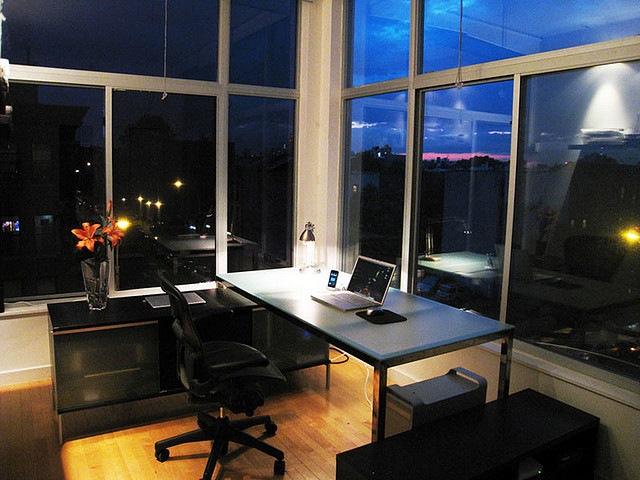
Not only will you be impressing others, but whenever the topic of minimalism in design is brought up, you can chime in with your expertise. Or submit your work to design minimalism roundups and showcases. Point is, you can confidently join in on the minimalism fun.

Design Minimalism

Minimalism is not only a principle that can help people with focus in their lives, but design minimalism can help simplify and improve your designs as well. The above 5 reasons have hopefully shown you why you should consider using design minimalism in your work. By including less in your designs, you’ll not only benefit your audience but yourself as well.

To recap, here are the 5 reasons to include less in your designs:

  1. Easier for your audience to view, navigate, and consume
  2. Looks cleaner and more attractive
  3. Easier for you to create
  4. Faster for you to finish
  5. You get minimalism bragging rights

Do you use minimalism in your designs? Share your favorite reasons for including less in your designs in the comments below.

You might also like…

The Trend of Minimalist Graphic Design →
How To Control Flow Within Your Web Designs →
Accessibility Principles for the Modern Designer →
40 More Stylish, Minimal and Clean Free WordPress Themes →
50 Inspirational and Fresh Minimally Designed Web Sites →
Professional Structure and Documentation in Web Design →
Clear Your Mind to Focus on What Matters →
What the Future of Cloud Computing means for Web Designers →
Beginners Guide to Using the Power of Color in Web Design →
Understanding and the Meaning of Color Within Design →

About the Author: (41 Articles)

Oleg Mokhov is the world's most mobile electronic musician and web + visual design enthusiast. He makes music that's a cross between Four Tet and Aphex Twin.

Comments and Reactions

  • http://iamautocomplete.com angelee

    Great read and tips. There are lots of awesome websites designed in a minimal approach that gives good benefits to the designer and to the user.

    I think the guy in the third image went crazy cos he’s sick of putting out few elements and all.. He really looks funny..

  • coachella

    I think only the first reason applies.

    The rest is all dependend on the designer’s taste and skills and the purpose of the website and its target audience.

    I like the minimalism bragging rights though :)

  • http://www.spo-inc.com Steve Pinkston

    I think the all are true, but content must be concise and extremely communicative for minimalism to be effective. In the visual clutter of our day to day lives, it can be used effectively to get attention. However, if the communication is not successful, then the effort is lost.

    Also, I find it ironic that we are talking about minimalism in a format that allows the clutter of ads in the right column. He who screams the loudest doesn’t deserve my attention.

    I’m a fan.

  • http://facilethings.com/blog/en/ Francisco Sáez

    Well, I’m not sure minimalism means “easier” and “faster”. You have to think a lot about what are you going to leave out and how are going to do that.

  • http://www.devctrl.net Jassen

    Awesome article… I have been a huge fan of minimilist design for a long time, so much easier to read, navigate, and looks so much cleaner than over produced ‘Web 2.0″ sites…

    Nice Job!

  • http://www.danielcollinsdesign.com DC

    They are NOT easier to create, nor do they take less time. Trust me ;-)

  • http://hellofisher.com Steve Fisher

    I totally agree with DC. Saying that minimalism is easier is completely wrong. Great design thinking distills things down to their essence.

  • http://www.kevonpowell.ca Kevin Powell

    Good minimalist design shouldn’t be easier or faster. Just because there is less on the page doesn’t mean a lot of thought doesn’t go into what should be included and what can be left out, as well as taking the time to properly balance everything.

    I think faster / easier is one of the greatest misconceptions of (good) minimalist design.

  • Pingback: Bruno Moura » The Beauty of Minimalist Design: 5 Reasons to Include Less

  • http://aprillins.com aprillins

    minimalism design reduces bytes out of website..

  • Andrei Gonzales

    Anyone who thinks minimalism is easier and faster to do doesn’t know how to do it / has never done it properly.

  • http://twitter.com/Drei_Gonzales Andrei Gonzales

    Minimalist design is one of the hardest and most time-consuming to pull off properly. Every REAL designer knows that.

    • http://www.balcora.org Ian Miles

      Please “Oleg” Read this man.

  • Vin Sullivan

    Sorry, but this article really is full of flaws and half-truths.

  • Ryan

    Sorry Oleg Mokhov but this is an awful article, Minimal design is most certainly not easier or faster and if you’re doing it for bragging rights then you’re doing it wrong.

  • Daniel

    Apologies, but I think this is probably one of the worst articles I have ever seen written on design, and I can’t agree with any points made here at all.

  • http://nathanhangen.com Nathan Hangen

    Note: I’m a card carrying member of the anti-minimalist movement, so take my opinion for what it’s worth, but…

    Perhaps minimalist design could be broken down into two subcategories:

    1. Minimal = Simple

    For example, my website is simple, has no fancy graphic elements, no fancy scripts, and no fancy layout. It’s basically a home page with some text, blah, blah, blah.

    This was simple, yet quick.

    2. Minimal = Bare Elements

    This is the more complex version. This is building something complex, and then stripping it down to the bare essentials. This is Steve Jobs. This is Cameron Moll.

    This is interface, navigation, line of sight, hierarchy. I agree, this is neither easy nor quick.

    Maybe that’s what was meant here?

    • http://blog.struktur.ca Colin

      Minimal does NOT = Simple.
      Minimal does NOT = Bare Elements.

      Please stop misleading people with the careless interchanging of these terminologies.

      To say that something is minimal just because it is bare, or appears simple, fails to take into account what minimal design’s purpose is.

      The purpose of a minimal design is to display content in such a manner that no element distracts attention from the visual hierarchy.

      The purpose of a minimal design is not to achieve simplicity in specific, although the goal of every design should be to arrive at some sort of visual balance that is not deemed to be excessively over-decorated.

      Every element in a minimal design should be carefully considered, and good minimal design is not just slapped together with the intention that it appears bare or empty and simple as the end result.

      Perfect example is this site here:

      http://designobserver.com/

      Hardly ‘bare’ and hardly ‘simple’ by conventional standards. I don’t see how someone can so carelessly interchange terms witch don’t mean the same thing, especially when they claim to be against this sort of design altogether. Please research the topic further if you plan to speak on what it is or isn’t.

      This whole idea that minimal designs are simply built in a complex manner, and then stripped down to the bare essentials is as silly as anything I’ve ever heard in terms of design myths.

      • http://nathanhangen.com Nathan Hangen

        Sorry, but I think we’re talking about different things here, and I can’t really speak to you until you step down from your pulpit.

        The site you linked looks like a 4 column WP template that I could find in the theme repository.

        Also, these articles disagree with you:

        http://www.smashingmagazine.com/2010/05/13/principles-of-minimalist-web-design-with-examples/

        http://www.webdesignerdepot.com/2009/12/minimalist-web-design-when-less-is-more/

        http://www.minimalistdesign.org/showcase/web-design

        there are many more.

        • http://blog.struktur.ca Colin

          What pulpit? Didn’t you say you were a card-carrying member of the anti-minimalism movement?

          First off, Design Observer looks like a template? You clearly fail to have a true understanding of the subject matter. This is why we’re talking about two different things. You’re talking about a certain aesthetic which you perceive to be minimalism, which is your first problem. I’m talking about minimal design and its core principles. Maybe this is why you are referring to things that have no direct relation to minimal design, and how a minimal design is achieved? You said it yourself, you don’t subscribe to the ‘movement’…

          Next off, neither Smashing Mag or WDD is minimalist, though they seem to try to capitalize on the so-called ‘trend’ as often as they can, as Speckyboy’s writers have so poorly done this time around.

          Is Web Designer Depot anywhere near minimal in your mind? Why would you quote a sign that in no way represents minimal design, as a source of authority or credibility on the topic? Sorry my friend, but you’ve failed…

          And since we’re talking about sites that looked templated, how about your’s? Was your comment on Design Observer supposed to be offensive? Templated or not, it is complex and not bare, and that was the idea behind me posting the link. It seems like you’re tossing stones from a very thin glass house there, mate.

          • http://nathanhangen.com Nathan Hangen

            I don’t really have a dog in this fight, so I’m not going to argue over semantics, but it has been an interesting discussion nonetheless.

            I quoted articles, not websites, sorry for the miscommunication there.

            My site is indeed a Squarespace template, but I don’t sell design services.

            Anyway, the design of The Studio book is fantastic. I did it. Wishing you the best.

            Nathan

            • http://nathanhangen.com Nathan Hangen

              Sorry, that was supposed to say “I dig it” not “I *did* it.”

  • http://mtness.net mtness

    What one tends to forget easily is that minimalism is in itself only another style type.

    Kind regards, mtness.

  • http://www.lahive.co.uk lahive

    Minimalism is so easy to get wrong and certainly not easier or quicker.

  • Pingback: Cinco razones para aplicar los principios del minimalismo en el diseño web - Diseño Web

  • http://smartuts.com smartuts

    most commentator here agree that it is not easier & faster to make an efficient minimal design. me too

  • Pingback: A Look at Minimalism (part 2) – In Transition

  • Pingback: A Look at Minimalism (part 1) – In Transition