
There’s a school of thought among web developers that clients don’t care about how you build something. They only care that things work as expected.
There’s some truth to that logic. Most of our clients aren’t WordPress experts. They don’t know Yoast SEO from Jetpack. They’re unlikely to know what separates a good theme from a poor one. They depend on us to build their website responsibly.
However, our choices will matter to them at some point in the future. For example, when an abandoned plugin includes an unpatched security issue. Or when an outdated theme isn’t compatible with the latest version of PHP.
Making the wrong choice can be costly for you and your clients. At the very least, it means additional maintenance. At worst, it could mean cleaning up a hacked website and dealing with a data breach.
So, how do you know if you’re choosing the best options for your clients? We have some tips for picking themes and plugins that have the best chance of future success.
Choose WordPress Products With a Good Reputation
The WordPress.org plugin repository hosts tens of thousands of items. However, not all of them are fit for use in a production environment. Consider that some plugins haven’t been updated in years, while others have existed for only a short time. The same scenario applies to themes.
That’s why choosing reputable products is so important. Even if something goes wrong, it’s likely to be fixed. Additionally, the best theme and plugin authors are proactive in implementing security measures.
Finding a reputable product isn’t difficult; it involves a little bit of research. Here are a few clues that a theme or plugin is trustworthy:
- An updated changelog: A regular pattern of updates indicates that the product is actively developed. New features are great. However, also look for bug fixes and security patches.
- Resolved support tickets: The WordPress.org forums are a great place to see how well a product is supported. Some commercial products may have their own support forums. Regardless, look for resolved tickets and frequent responses from their support team.
- A steady active install count: The theme and plugin repositories include active install counts. A high number doesn’t always correlate to quality, but it’s an indicator of a trusted product. Even a relatively low number is acceptable, provided the items above are addressed.
None of us can guarantee the long-term outlook for a theme or plugin. But choosing one with a good reputation should increase your confidence. It’s something your clients will also appreciate.
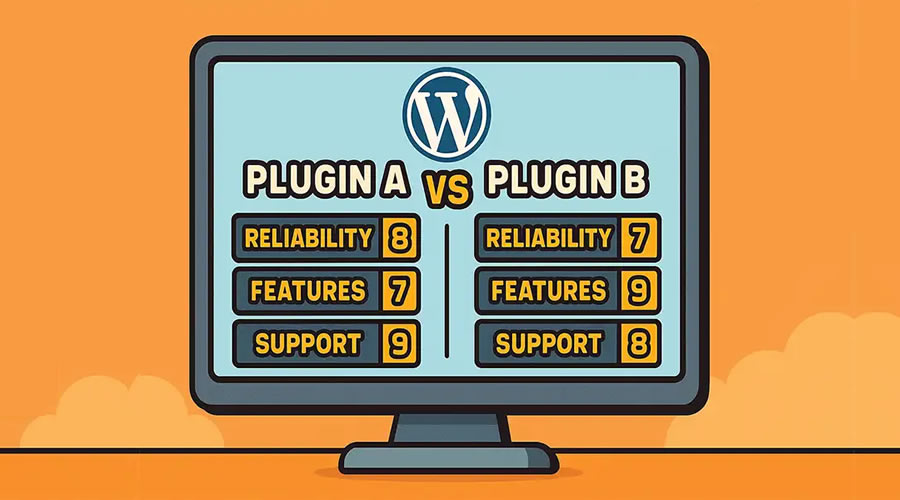
Consider the Pros & Cons of an Ecosystem
Some WordPress themes and plugins come with their own ecosystems. WooCommerce is a prime example, as the e-commerce platform offers extensions you can use to add functionality. Other examples include Gravity Forms, Kadence, and GeneratePress.
Buying into such an ecosystem has advantages. Compatibility should be top-notch, for one. It’s better than a piecemeal approach, where you add unrelated software from all over the web. Each piece fits together to create something bigger.
Theoretically, this should mean easier maintenance, particularly if each item comes from the same author. Product upgrades arrive in lock-step and avoid major issues.
There are some potential downsides to this approach. An ecosystem must be sustainable, for one. Imagine investing in a family of theme products that goes out of existence. That means your clients are using software that is no longer actively developed. It’s only a matter of time until there are problems.
Plus, a singular part of an ecosystem could fall into a black hole. Many WooCommerce extensions are built by third-party developers, for example. That’s great for innovation. Yet, there’s also a risk that the product won’t keep up with changes to the parent plugin.
Once again, this is where reputation comes into play. Scrutinize an ecosystem and its related products as you would any other theme or plugin. Don’t assume every item is of equal quality or strength.
Think About the Bigger Picture
It’s easy to fall into short-term thinking when working on client projects. We’re trying to meet client expectations within a tight timeline and budget. That can lead to installing a theme or plugin simply because it’s the fastest solution.
We may not realize the long-term consequences of those decisions. Using what’s most convenient in the moment doesn’t guarantee quality or reliability. Make the wrong choice, and suddenly, your client will care about how you built their website.
Keep that in mind as you plan for a project. Consider the future needs of the website and how things will look in a few years. Do you see a WordPress theme or plugin that’s still humming along? Or might you be in a panic to replace a key component?
No decision is without risk. However, you can reduce it by doing your homework. Doing so will lead to easier maintenance and more peace of mind.
Related Topics
Top